
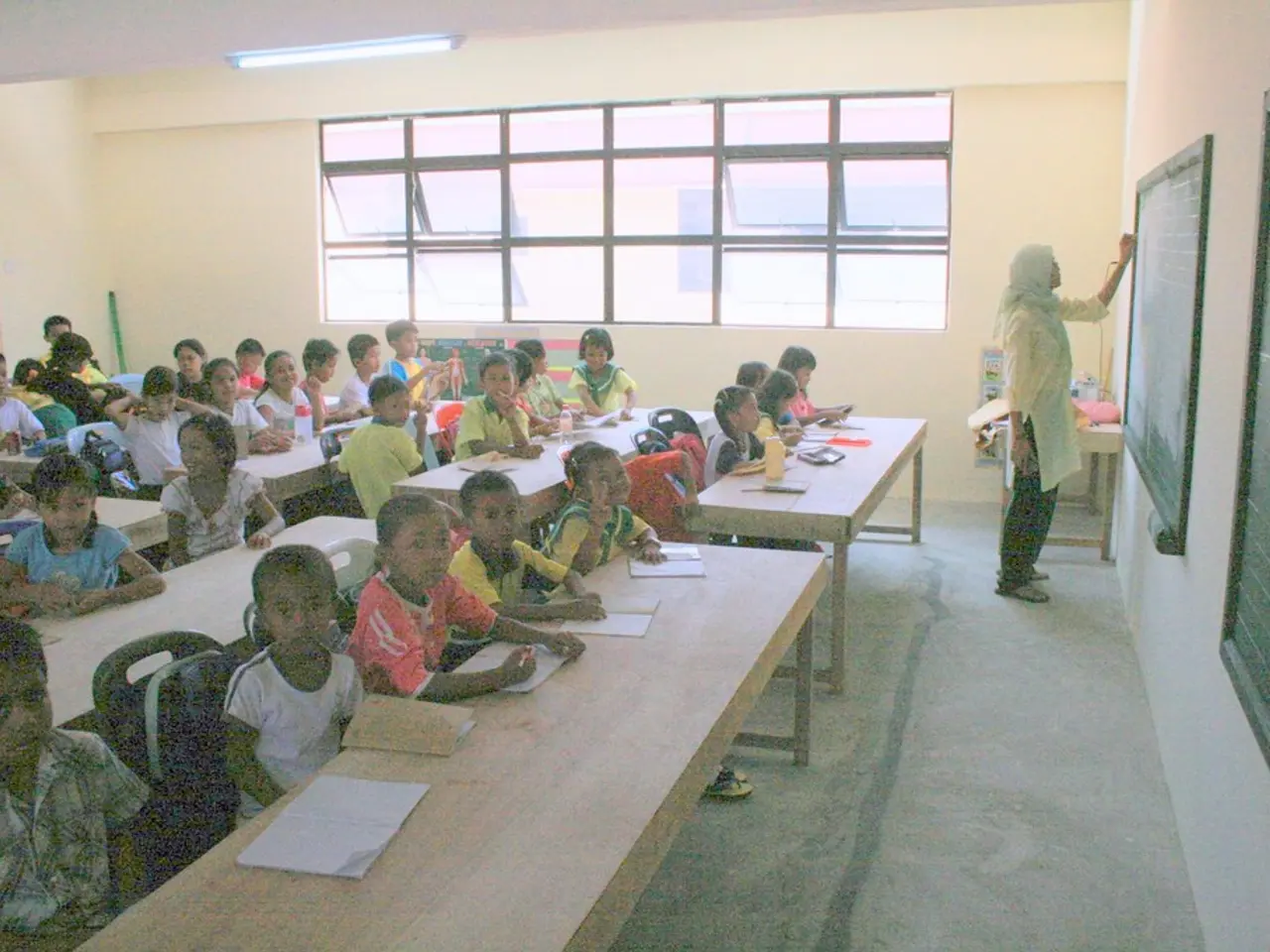
Fostering Diversity-Driven Integration in Schools for a Diverse Tomorrow
Social inclusion in schools has proven to be a powerful tool for fostering a supportive and inclusive learning environment for students of all abilities. Case studies such as the "Inclusive Schools Project" in Canada and the "Peer Buddy Program" in the United States demonstrate the impact of social inclusion, showing improved academic performance and a decrease in bullying and discrimination.
A commitment to social inclusion is essential for students' emotional and social development, cultivating a sense of belonging that is fundamental to their overall well-being. In special education settings, effective strategies are crucial for promoting social inclusion.
Strategies for Social Inclusion in Special Education Settings
- Tailored Instruction and Support: Use Individualized Education Programs (IEPs) to customize learning to each student’s needs and employ assistive technologies to aid accessibility and participation.
- Peer Interaction and Cooperative Learning: Encourage peer tutoring and group work to build social skills, engagement, and collaboration between students with and without disabilities.
- Social and Emotional Learning (SEL): Implement SEL activities such as role-playing, group discussions, mindfulness exercises, and affirmation activities to nurture empathy, self-regulation, and emotional safety.
- Collaborative Team Approach: Facilitate regular communication and cooperation among general educators, special educators, therapists, counselors, and families to provide holistic support and consistency.
- Adaptable Curriculum and Differentiated Instruction: Design lessons that use multiple means of representation, engagement, and expression, allowing diverse learners to participate actively.
- Positive Behavior Support: Apply proactive behavior management focusing on reinforcement and understanding underlying causes rather than punitive measures.
- Parental Involvement: Engage parents through meetings, workshops, and inclusive events to support planning and reinforce inclusion efforts.
- Cultivating Culture of Belonging: Promote student voice, celebrate diversity, and train staff in cultural responsiveness to foster an inclusive community where all students feel valued.
The Importance of Social Inclusion in Schools
Social inclusion in schools contributes to reduced stigma and discrimination, leading to an atmosphere where diversity is celebrated and respected. It significantly enhances the educational experience for students with special needs, helping individuals with disabilities develop essential social skills, improve self-esteem, and foster a sense of belonging.
Educational policies play a significant role in fostering social inclusion in schools, particularly in the context of special education, by mandating that schools provide free appropriate public education tailored to individual needs. Disability rights legislation, such as the Americans with Disabilities Act (ADA) and the Individuals with Disabilities Education Act (IDEA), reinforces the importance of social inclusion by mandating equal opportunities and accessibility for students with disabilities.
Overcoming Barriers to Social Inclusion
Attitudinal barriers, arising from misconceptions or biases regarding special education, can create an unwelcoming environment. Resource-related barriers, including insufficient funding for special education programs, can limit access to necessary support services. Structural barriers, such as inadequate physical infrastructure, can impede the successful integration of students with diverse needs.
Feedback from students and teachers serves as a valuable metric in assessing social inclusion in schools, offering insights into classroom dynamics and student experiences. Quantitative measures, such as attendance rates and participation in school events, provide insight into how engaged students are within their school community. Surveys and questionnaires designed to capture student perceptions of inclusion can be instrumental in identifying areas needing improvement.
The Future of Social Inclusion in Schools
Ongoing professional development for teachers will be crucial in preparing them to address social inclusion effectively, focusing on inclusive practices and cultural competency. The ongoing evaluation of social inclusion is fundamental to fostering an equitable educational environment.
Social inclusion in schools nurtures not just academic achievement but also vital life skills like resilience and cooperation. Future directions for social inclusion in schools involve implementing innovative approaches that prioritize diversity and equity, integrating technology, and fostering collaboration between schools, parents, and the community.
Ultimately, social inclusion in schools is vital for fostering an environment where all students, regardless of their backgrounds or abilities, can thrive. Assessment tools and metrics serve as essential mechanisms for evaluating social inclusion in schools, facilitating the identification of both strengths and challenges in fostering an inclusive environment for all students. Understanding social inclusion involves recognizing the various dimensions that contribute to a supportive educational atmosphere, including valuing diversity, encouraging meaningful participation, and providing equitable access to resources and support.
- To further equip teachers with the skills necessary for promoting social inclusion, e-learning platforms can be employed for professional development, focusing on inclusive practices and cultural competency.
- In the realm of education-and-self-development, social media can serve as a powerful tool to facilitate teamwork skills, both within and beyond academic settings, through collaborative discussions and group projects.
- As we strive for a more inclusive educational landscape, entertainment media can play an unexpected role in breaking down barriers by featuring diverse characters and storylines that foster empathy and understanding, contributing to a lifestyle that cherishes inclusion and diversity.