
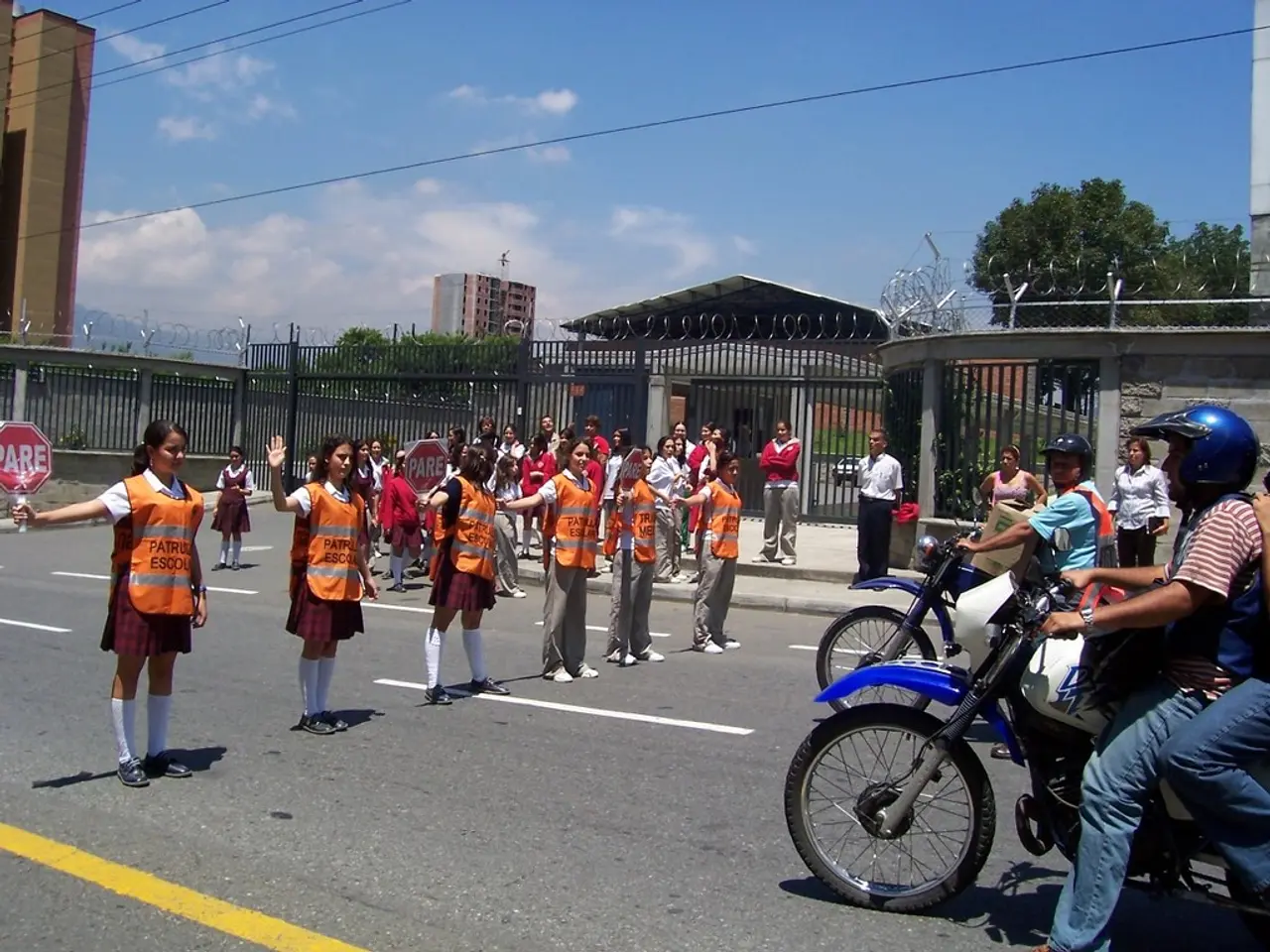
What lies ahead for the schooling of these kids in the future?
In the picturesque village of Hergensweiler, a pressing issue has arisen: the need for reliable drivers to ensure the safe transportation of primary school children who have a longer distance to travel. The municipality-owned minibus, currently in use for this purpose, will be permanently taken out of service at the start of the summer holidays due to mechanical issues.
Sibylle Englmann, a concerned member of the community, has appealed for potential drivers to come forward, given the dramatic situation. Gerhard Kern proposed postponing the decision, which was agreed upon by the council with six yes and two no votes.
As the search for drivers intensifies, several strategies are being considered to address the unique challenges posed by this rural area with safety concerns and a limited budget.
1. **Offering Financial Incentives and Competitive Pay:** Despite budget constraints, modest financial incentives can attract qualified drivers. New hire bonuses and increased pay for drivers with commercial driver's licenses and school bus endorsements could make the roles more appealing.
2. **Providing Paid Training and Career Advancement Opportunities:** Promoting paid training for those interested but lacking certifications can broaden the pool of potential drivers. Emphasizing career growth and professional development may encourage applicants to commit long term.
3. **Leveraging Local Community and Word of Mouth:** Recruiting within the community via local events, schools, churches, and town meetings can be effective. Highlighting the importance of safety and community contribution may motivate applicants who want to serve their neighbors.
4. **Partnering with Transportation Vendors or Cooperatives:** If direct hiring strains resources, consider partnerships or contracts with regional transportation providers experienced in school routes. Such partnerships can reduce driver shortages and improve reliability while addressing safety through professional management.
5. **Using Technology and Schedule Optimization to Reduce Driver Needs:** Implementing efficient routing software and staggered school start times can allow fewer drivers to cover more routes, stretching limited human resources without compromising service.
6. **Investing in Safety Training and Technology:** Routine training on handling student behavior and use of modern bus safety technology (e.g., GPS tracking, communication apps) supports a safer environment for drivers and students alike, making the job more manageable and attractive.
7. **Communicating Clearly with Families and the Community:** Transparent communication about routes, safety measures, and driver recruitment may increase community support, potentially attracting volunteer or part-time drivers who trust the system and want to help.
However, the municipality is under special observation by the district office and is urged to reduce expenses, making additional investments like a new vehicle or new positions difficult to justify. The costs for a municipality-owned school transport are significantly higher than those of public transport, with the PT variant costing around 6,050 euros per year compared to 21,548.42 euros for the municipality-owned bus.
Michael Bihler raised concerns about timing issues with public transport, stating that children from Obernützenbrugg would arrive at school too early, while those from Mollenberg would only just make it in time. Despite these challenges, a balanced, practical approach that combines these strategies forms the best hope for recruiting drivers in rural areas with limited budgets and safety concerns.
In this scenario, the region of Hergensweiler recognizes the importance of education-and-self-development for its citizens, particularly the primary school children who require safe transportation. As the search for drivers intensifies, strategies that focus on education-and-self-development have been proposed to attract qualified individuals. These strategies include offering financial incentives, providing paid training and career advancement opportunities, and investing in safety training and technology, all of which can help create a more appealing and professional environment for potential drivers.